Thursday, August 6, 2009

Night Into Day


Night Into Day


Sangin, Helmand Province

Afghanistan


Finding the Enemy

Finding the Enemy


29 July 2009


Orders are given before every operation.  The orders filter down through various unit levels involved, until each platoon finally recieves its specific mission.  The concept for this mission came down from the 2 Rifles Battlegroup (battalion) to the  companies, including elements of the Afghan National Army and their British counterparts from the Welsh Guard, and down to each 2 Rifles platoon involved.  So for any mission there might be literally dozens (or more) orders and rehearsals until each man and woman knows the perceived enemy situaton, their specific tasks, and much more.  While soldiers here at FOB Jackson received orders, undoubtedly pilots and others, stationed far away, perhaps on an aircraft carrier or even farther afield, were finalizing related plans.2 rifles sniper


On 23 July, the afternoon before the mission, a call came into headquarters that two British soldiers had been wounded by two IEDs, and that the American helicopter medevacs known as “Pedro” had been called to extract the casualties.  Pedro is a potent morale booster; British soldiers know that their American brethren in the medevac helicopters will come for them anytime anywhere, guns blazing if needed.  Medevac is dangerous work; earlier this month, a bomb detonated, killing and wounding soldiers from 2 Rifles, and when they moved to prepare for medevac, another bomb exploded.  In all, five soldiers were killed and many wounded. Yet the soldiers know that if they can get their buddies while still alive onto Pedro, chances for survival are dramatically increased.  In addition to carrying outstanding medical crew, Pedro would roar back to Camp Bastion’s first-rate trauma center in about fifteen minutes.  Night or day, gunfight or not, Pedro will be there.


23 July 2009, at 1600 hours: Corporal Kris Griffith, from British 2 Rifles FSG Snipers, receives his mission.  The gear is already prepared.  The weapons are spotless.  All that’s left is one last round of checks, and then to try to sleep until about 2345 hours.

23 July 2009, at 1600 hours: Corporal Kris Griffith, from British 2 Rifles FSG Snipers, receives his mission. The gear is already prepared. The weapons are spotless. All that’s left is one last round of checks, and then to try to sleep until about 2345 hours.


At midnight, soldiers arrived in the mess tent for breakfast.

At midnight, soldiers arrived in the mess tent for breakfast.


After breakfast, the soldiers pulled on their body armor and what seemed like dozens of sorts of weapons: rockets of various sorts, different types of machine guns and rifles, grenade launchers with odd sorts of grenades, hand grenades, pistols, knives, radios (probably most deadly of all) and lots of attitude.  A few soldiers smoked last cigarettes and then we trod on foot into some of the most bomb-laden stretches of Afghanistan.  Everyone wore night vision gear, but it was so dark that I left the PVS-14 flipped up, on standby mode, and used what little ambient light was there.


Even at 3200 ISO, f1.2, 1/8s, precious little light was registering on the camera sensor.

Even at 3200 ISO, f1.2, 1/8s, precious little light was registering on the camera sensor.


The camera was nearly useless (as the shot above will attest), but in fact the enhancement below shows the eerie apparition of the soldier as we headed into the battlefield.  With water crossings ahead and the darkness, the camera was better stowed in the waterproof bag inside the rucksack, so was soon tucked away.


Each soldier had been told to carry at least six liters of water, and so I carried 8.5 liters.  Everyone carried medical kits, including bandages and tourniquets on the right side, and an un-cracked infrared chemlight on their helmet, and a blue chemlight for casualties.  Twenty British soldiers have been killed in Afghanistan this month so far [the number since this mission has increased], and probably another hundred to hundred and fifty have been wounded.  Ingress was dangerous, with land mines and other bombs planted in every route the soldiers were likely to take, and so we set off through the most unlikely routes that the commanders could manage.  All roads and paths are mined or laced with IEDs, at choke points such as bridges and easy ground.  And so we slogged through muck and soft ground, and crossed irrigation canals by ladder or wading through in the dark.  The soldiers were quiet and used no lights, though some used the night vision monocular that would leave a faint green glow around one eye.


Each soldier had been told to carry at least six liters of water, and so I carried 8.5 liters. Everyone carried medical kits, including bandages and tourniquets on the right side, and an un-cracked infrared chemlight on their helmet, and a blue chemlight for casualties. Twenty British soldiers have been killed in Afghanistan this month so far [the number since this mission has increased], and probably another hundred to hundred and fifty have been wounded. Ingress was dangerous, with land mines and other bombs planted in every route the soldiers were likely to take, and so we set off through the most unlikely routes that the commanders could manage. All roads and paths are mined or laced with IEDs, at choke points such as bridges and easy ground. And so we slogged through muck and soft ground, and crossed irrigation canals by ladder or wading through in the dark. The soldiers were quiet and used no lights, though some used the night vision monocular that would leave a faint green glow around one eye.


This is an active battlefield—even as I write these words on 27 July an Apache is firing down with its 30mm (killing four Taliban) nearby and combat occurs many times per day—and so this mission can only be described in general terms.  In broad strokes, the mission on 24 July was to bait the enemy to take certain actions, and there were multiple moving parts to our side, making it difficult for the enemy to keep track of our combat elements.  Though we would leave obvious boot tracks through fields and neighborhoods, our units split and went here and there, and so despite that the enemy had home field advantage, we could still achieve relative surprise for at least short periods.  As the soldiers quietly sweated and moved through the darkness, dogs barked in the night; the canines sometimes go nuts at quiet but high-pitched emanations from the metal detectors.


Along the way, Rifleman Ryan Grieves busted his ankle, possibly breaking it, so the British soldiers pushed out into security positions and my section of eight (seven men, one woman) pushed through a canal and forward.  We moved up to a compound and there an incadescent light made me very uncomfortable and I tried to melt into a shadow near a rifleman who was doing the same.  A British soldier moved toward the light – many times soldiers just whack out the lights – but he carefully unscrewed a few twists and a more comfortable darkness returned and we moved forward.


Along the way, Rifleman Ryan Grieves busted his ankle, possibly breaking it, so the British soldiers pushed out into security positions and my section of eight (seven men, one woman) pushed through a canal and forward. We moved up to a compound and there an incadescent light made me very uncomfortable and I tried to melt into a shadow near a rifleman who was doing the same. A British soldier moved toward the light – many times soldiers just whack out the lights – but he carefully unscrewed a few twists and a more comfortable darkness returned and we moved forward.


Other sections pushed forward and entered a compound where more than a half dozen Afghan women and girls were sleeping in the open on a raised platform, under the Milky Way, where it was cool.  The lights inside bathed the compound with an amber glow.


The interpreter explained our situation to the women and girls, who hardly seemed startled and not the least bit afraid.  Everyone knows that women and children will be treated well, and I kept the camera mostly out of sight and away from the women.  The British soldiers stayed away from the open area where the women and girls just watched us from the platform, though a couple of them seemed to fall back asleep.


Rifleman Grieves had been on point—an extremely dangerous place to be—and was unhappy to suddenly be carried by his buddies and to slow down the mission.  But that’s the way it goes; the ground was favorable to a broken bone or two, and Rifleman Grieves had drawn that straw and busted the ankle.  (Later we learned it was not broken.)

Rifleman Grieves had been on point—an extremely dangerous place to be—and was unhappy to suddenly be carried by his buddies and to slow down the mission. But that’s the way it goes; the ground was favorable to a broken bone or two, and Rifleman Grieves had drawn that straw and busted the ankle. (Later we learned it was not broken.)


Medic Lance Corporal Beth Sparks is on her job, while Rifleman Karl Dresser talks to Ryan Grieves who is on his back.  A soldier took Grieves’s weapon and cleaned it spic and span; the barrel got stuffed with mud, which can be a problem out here, and you’ve got to pay close attention, especially at night.  Firing the weapon with mud in the barrel will cause it to explode, which takes the rifle out of action and possibly the rifleman, too.

Medic Lance Corporal Beth Sparks is on her job, while Rifleman Karl Dresser talks to Ryan Grieves who is on his back. A soldier took Grieves’s weapon and cleaned it spic and span; the barrel got stuffed with mud, which can be a problem out here, and you’ve got to pay close attention, especially at night. Firing the weapon with mud in the barrel will cause it to explode, which takes the rifle out of action and possibly the rifleman, too.


Corporal Lee Edwards with Molly the bomb dog.  Everyone loves Molly.  First off, she’s a cool dog that likes to swim in the river with the soldiers, and secondly she trots into combat and has found a lot of bombs that could/would have blown people up.  Molly can cross ladders spanning deep ditches, or when needed she piggybacks on Corporal Edward’s shoulders.  It seems that every working dog in Afghanistan is treated better than the soldiers.  Molly is no exception.  Corporal Edwards treats Molly like the Queen of Sangin.

Corporal Lee Edwards with Molly the bomb dog. Everyone loves Molly. First off, she’s a cool dog that likes to swim in the river with the soldiers, and secondly she trots into combat and has found a lot of bombs that could/would have blown people up. Molly can cross ladders spanning deep ditches, or when needed she piggybacks on Corporal Edward’s shoulders. It seems that every working dog in Afghanistan is treated better than the soldiers. Molly is no exception. Corporal Edwards treats Molly like the Queen of Sangin.


[Please see Canine hero in Afghanistan,DOG GET SNIFF OF THE ACTION?]


Up to this point, there had been no gunfire, but first light was coming at 0440, and we needed to get into position before light.  So my section of eight left the compound while others stayed behind with Rifleman Grieves.


Corporal Kenny Copeland 2 Plt A Coy 2 Rifles.

Corporal Kenny Copeland 2 Plt A Coy 2 Rifles.


We moved another two hundred meters through low corn to another compound, which was occupied by a family.  The man of the “house” asked if he could leave, and if he could take his wives and children.  The British soldiers treated the family respectfully saying they were free to stay or to go.  I kept the camera low.  After all, the man was not known to be Taliban, just a farmer, and it’s bad enough that we would commandeer his compound for half a day, much less that someone would start to take photos.  The soldiers were respectful of the little property, though there was practically no property other than a few filthy blankets, nasty pillows, one light bulb, and just enough cooking utensils to fill up a brown grocery bag.  The family tantamount lives in a barn with three cows, two donkeys, some sheep, chickens, and what appeared to be a fat dove-like bird in a cage hanging above their filthy blankets.  Corn, okra and other vegetables were growing within the compound.


The compound, rooms and all, covered an area about the size of a tennis court.  Tomato slices were laid out drying on a chest-high wall while human and animal feces dried just near the bottom of the same wall.  Fred Flintstone would call the place primitive.


The compound had been selected because the commanders thought Taliban might stumble into us while the Taliban were, let’s say, reacting to some other initiatives.  If the Taliban ran into us, the soldiers were to kill them, and by now various elements were scattered smartly about to make the Taliban feel like a pinball, only instead of getting hit with flippers, it might be machine guns, rockets, mortars, howitzers, and fire from aircraft.  The Taliban are trying to snare us with mines, bombs, and SAFIRE (small-arms fire), and basically we try to do the same, only we don’t use mines, and our bombs often come from the sky.  The Taliban are very brave, but they are ignorant brutal men who murder locals who do not support them, and brave doesn’t stop bullets.


After we occupied the compound and the family walked out, the soldiers heard some activity and were keen to check it out.  Compound walls are incredibly resilient and can stop 30mm rounds, so AK-47 bullets make little more impression than do mosquitoes on windshields, but that doesn’t stop people from tossing grenades over the walls or popping up from tunnels.

After we occupied the compound and the family walked out, the soldiers heard some activity and were keen to check it out. Compound walls are incredibly resilient and can stop 30mm rounds, so AK-47 bullets make little more impression than do mosquitoes on windshields, but that doesn’t stop people from tossing grenades over the walls or popping up from tunnels.


The rustling next door was just a family going about their business.

The rustling next door was just a family going about their business.


And so we waited, and waited.  While other British and Afghan elements did their work.  Our job was to wait for about ten hours to shoot any Taliban who stumbled by, or maybe call in an air strike or cannon fire.

And so we waited, and waited. While other British and Afghan elements did their work. Our job was to wait for about ten hours to shoot any Taliban who stumbled by, or maybe call in an air strike or cannon fire.


Lance Corporal Kevin Bowen, from Jamaica, mans the radio after carefully checking/cleaning his machine gun and laying the brush down.  Kevin’s accent is easier to understand than some of the British accents.

Lance Corporal Kevin Bowen, from Jamaica, mans the radio after carefully checking/cleaning his machine gun and laying the brush down. Kevin’s accent is easier to understand than some of the British accents.


Riflemen Jamie Massey and Jordan Farrer checked their weapons and zonked out.  Everyone was wet from the canal crossings and sweat, and so the morning was chilly.

Riflemen Jamie Massey and Jordan Farrer checked their weapons and zonked out. Everyone was wet from the canal crossings and sweat, and so the morning was chilly.


The ladders are used to get on the roofs.  This family was so poor that they did not even sleep on a raised platform, and didn’t seem to have a radio, but they did have the fat dove-like bird in the cage, which apparently was their only song.

The ladders are used to get on the roofs. This family was so poor that they did not even sleep on a raised platform, and didn’t seem to have a radio, but they did have the fat dove-like bird in the cage, which apparently was their only song.


Corporal Chelsea Williams and Color Sergeant Kevyn Diggle ('Diggs') clean their weapons.

Corporal Chelsea Williams and Color Sergeant Kevyn Diggle ('Diggs') clean their weapons.


'Diggs': ready for action.

'Diggs': ready for action.


As earth warmed under the rising sun, flies began buzzing about.  Kevin Bowen was ready for the onslaught.

As earth warmed under the rising sun, flies began buzzing about. Kevin Bowen was ready for the onslaught.


Kitchenware: This represents nearly the entire extent of the family’s utensils and tools.  There was little more besides a shovel and a pump sprayer for herbicide/pesticide, and they had the few blankets and pillows.  A small stack of poppy was drying by the front door.  How can anyone be blamed for joining the Taliban when they live like this?  (We have no idea if this guy was Taliban.)  Sangin is a fester-pot of the Taliban: Isolation, poverty and distilled ignorance create ideal conditions for the cult.

Kitchenware: This represents nearly the entire extent of the family’s utensils and tools. There was little more besides a shovel and a pump sprayer for herbicide/pesticide, and they had the few blankets and pillows. A small stack of poppy was drying by the front door. How can anyone be blamed for joining the Taliban when they live like this? (We have no idea if this guy was Taliban.) Sangin is a fester-pot of the Taliban: Isolation, poverty and distilled ignorance create ideal conditions for the cult.


U.S. B-1 bomber roars miles overhead.  During the mission of 24 July, hundreds of millions of dollars’ worth of aircraft covered us at one time or another.  The B-1 above is departing at 0631 local, when this photo was made, while sporadic SAFIRE and machine-gun fire competed with the birds chirping.


U.S. B-1 bomber roars miles overhead. During the mission of 24 July, hundreds of millions of dollars’ worth of aircraft covered us at one time or another. The B-1 above is departing at 0631 local, when this photo was made, while sporadic SAFIRE and machine-gun fire competed with the birds chirping.


Impersonal view of Sangin from approximate bombing altitude of the B-1.

Impersonal view of Sangin from approximate bombing altitude of the B-1.


Secretary of Defense Robert Gates and General Stanley McChrystal put sharp restrictions on the ROE (Rules of Engagement), which caused many armchair generals to throw tantrums that we are endangering our troops.  (Years of loose ROE clearly did not work; during the cowboy years since 2001, Afghanistan got worse.)


Secretary Gates, General McChrystal and troops all over Afghanistan are making difficult decisions.  Only time will reveal if McChrystal and crew can turn the war around.  If our folks – the Coalition in general – can reverse the slide, they will deserve the same respect that was earned for the turn-around in Iraq.(emphasis mine)


PBR Street Gang, this is Almighty Standing by.

PBR Street Gang, this is Almighty Standing by.


It’s great to know that Almighty is up there, yet it’s also clear that Almighty needs to keep those bomb bay doors closed most of the time.  Down here, this could not be more clear.  We can pulverize the Taliban from now until we are ready to go home, but if Afghanistan is to be brought into the first millennium, we need the resources to build, the patience and stamina to see it through, and greater wisdom than has so far been brought to task.  And sometimes Almighty.  These Afghans on the ground need education and development.  Without education, we will develop only richer more confident enemies.


At about 0700 hours, a couple of mortars or rockets explode close enough to cause me to step inside a mud room.  At 0708 hours, a B-1 again roars over and disappears.  A report comes on the radio that Afghans passing through an ANA (Afghan National Army) checkpoint say that Taliban are warning families to leave the area around us.  Meanwhile, a man neatly dressed with a robe drives by at various times (during the day) on a motorcycle.


A soldier on the roof sees families leaving nearby compounds.   At 0711 two fighting-aged males move into a compound nearby.  I ask Chelsea Williams, who is military police, if her family and friends know she comes out into combat.  Chelsea laughs, saying her family thinks she is on Camp Bastion, which is about the safest place in Afghanistan.  I say to Chelsea that she should never tell her family what she really does because they won’t believe her anyway.  Chelsea laughs and there is sporadic small-arms fire from different directions, but nobody is shooting at us.  What’s the use in Chelsea trying to explain all this?  At 0717 there is a controlled three-round burst from a machine gun, and a couple of sparrows land on a wire in the compound.  Less than a minute later, another controlled machine-gun burst and the sparrows glance around and chirp but hardly seem to notice.  It seems certain that the sparrows live better than does this family.  The machine-gun bursts must have been either British or ANA trained by British; Taliban would have let rip the machine guns in longer bursts.  I ask the radio operator if he knew  who was firing and he answers that it was ANA.  Two minutes later intel comes in that Taliban are in a compound just near us and are “ready to go.”


Between 0719 and 0825 is sporadic SAFIRE and machine-gun fire (probably a few hundred rounds) and occasional booms from RPG shots.


Sangin: everything that is not under our direct view is under heavy Taliban influence.  The Taliban still control Sangin more than we do.  The entire surrounding area is under Taliban control.  The British are confident they are making progress, and my initial impression is to say they are in fact making progress, though the journey will be long.

Sangin: everything that is not under our direct view is under heavy Taliban influence. The Taliban still control Sangin more than we do. The entire surrounding area is under Taliban control. The British are confident they are making progress, and my initial impression is to say they are in fact making progress, though the journey will be long.


As the sun rose higher, the soldiers stuck it out on the sweltering roof.  Many of these soldiers have been to Iraq, and it was much hotter in Basra, but still the temperature would climb to about 110 degrees in the sun.  They were chugging the water but without complaints.

As the sun rose higher, the soldiers stuck it out on the sweltering roof. Many of these soldiers have been to Iraq, and it was much hotter in Basra, but still the temperature would climb to about 110 degrees in the sun. They were chugging the water but without complaints.


With the family gone, the animals became thirsty and hungry and broke out of the pin and started ravaging the family garden.  It seemed fruitless to try to stop the animals, but Diggs was the defender of the family plot and kept herding the animals until finally he rounded them all back up.  The Afghan man came back with a couple of his burkha-clad wives, apparently for the animals that needed to be watered and fed, but the soldiers made what I thought was a smart decision and didn’t let them back in.  The man already knew our strength, and allowing him in would show our posture.


With the family gone, the animals became thirsty and hungry and broke out of the pin and started ravaging the family garden. It seemed fruitless to try to stop the animals, but Diggs was the defender of the family plot and kept herding the animals until finally he rounded them all back up. The Afghan man came back with a couple of his burkha-clad wives, apparently for the animals that needed to be watered and fed, but the soldiers made what I thought was a smart decision and didn’t let them back in. The man already knew our strength, and allowing him in would show our posture.


The brown splotches on the wall (upper-center) are manure that is dried and used for cooking.

The brown splotches on the wall (upper-center) are manure that is dried and used for cooking.


The pin is made from mud and sticks and reminded me of Red Riding Hood.  In Afghanistan, a home made of mud is practically bombproof against violence that would shatter a home made of bricks, but unfortunately, the Big Bad Wolf that once nearly swallowed the whole of Afghanistan is the Taliban, and Sangin truly is part of the Taliban belly.  (Yet in one telling indicator of Taliban weakness, we are in their belly and there is little they can do about it.  They are trying to expurgate us, but they are growing weaker, slowly weaker, in Sangin.)

The pin is made from mud and sticks and reminded me of Red Riding Hood. In Afghanistan, a home made of mud is practically bombproof against violence that would shatter a home made of bricks, but unfortunately, the Big Bad Wolf that once nearly swallowed the whole of Afghanistan is the Taliban, and Sangin truly is part of the Taliban belly. (Yet in one telling indicator of Taliban weakness, we are in their belly and there is little they can do about it. They are trying to expurgate us, but they are growing weaker, slowly weaker, in Sangin.)


Soldiers not on guard were trying to sleep because good infantry soldiers never miss a chance to fill canteens or sleep, and they already had filled canteens.  At 0835 there was a brisk salvo of something bigger than RPGs, sounded like 105mm howitzer. Whoever had fired went straight to FFE (Fire For Effect) and skipped any adjustment, indicating the fire came from a fixed base onto a pre-registered target.  At 0837 another salvo popped off and though I was half-asleep, it sounded like about 35 rounds, but I lost count and it might have been mortars.  A radio call said our guys were trying to cut off some Taliban and trying to push them into a different area that favored our side, so that they could be hit by ambush or air strike.


Off and on we could hear “Green Eyes,” a UAV, buzzing like a lawnmower overhead.  I got up and at 0842 the guard on the roof again spotted “two geezers” moving about 50 meters from us.  The fields were completely dead.  No farmers, nobody.  By 0900 it was starting to get warm and bright so I switched the clear Oakley lens to the amber.  It’s important to wear ballistic eyewear because eyes are more expensive than Oakleys.  Plus it will be harder to write if my eyes get blown out.  The British NCOs are strict that the young soldiers wear the glasses and gloves.  There continued sporadic fights from various directions, but we were uninvolved, though a bullet zinnnged overhead (sounded like it came from many hundreds of meters away).  At 0921 a proper firefight broke out and the radioman relayed saying ANA was in a big fight, which was doggone evident.  Other than that, I didn’t realize it was ANA; some shooters seemed to be controlling fire and some weren’t.  There were some explosions and the firefight seemed to subside after a mere three minutes.


By 0925 all of us are sweating in the shade.  My water inventory: 2.5 liters gone, 6 liters to go.  The soldiers who are awake are in good spirits, as if this is just a picnic that they do every day.  I try to go back to sleep as the firefight resumes at 0930.  I look around the sad compound and realize that even birds make better homes.  


There is a large explosion and I have no idea what it is, and at 0935 more explosions, and between 0936 and 0937 more explosions—maybe mortars—while I try to sleep, and by 1015 it’s quiet but the cloudless day is growing hot.  At 1104 an Apache comes overhead then flies away.  The soldiers on the roof must be cooking, but not nary a word of complaint from anyone about anything.


The only cupboards were simple recesses in the mud walls.

The only cupboards were simple recesses in the mud walls.


The Sketch

The Sketch


The animals needed to be fed and watered, but what were we to do?  The Afghan man of the compound sent his three children to another compound, where another British section waited in ambush and where Grieves waited to be extracted with his messed-up ankle.   The kids, a boy and two girls, were trying to say something to Captain Nick White, who pulled out his notepad and a child drew the picture above.  Captains Nick White and Aaron West realized that the kids wanted to feed the cows, and told the kids it was okay to come back to our compound.  The kids gave the sketch to Diggs who let the kids in.


The two girls and the boy fed and watered all the animals, smiling at the British soldiers the whole time, and finally they left with the fat dove-like bird and the sheep, donkeys and cows.

The two girls and the boy fed and watered all the animals, smiling at the British soldiers the whole time, and finally they left with the fat dove-like bird and the sheep, donkeys and cows.


As hours dragged by, the fields were empty, and sporadic firefights continued around us while I slept in the feed storage room and the soldiers slept here and there.  Each time a soldier walked on the roof, sand and dried mud rained on my sweating face.  Another firefight broke out, apparently again with ANA, and this time some bullets whizzed overhead but we were out of the action.  The motorcycle driver had gone by probably ten times by that point.


At 1343 came a BOOM  shoooooosszzch BAM!  Diggs said that some kind of rocket had just been fired and he told the radio operator to call it up, and as it happens, my watch was off sync by about 2 minutes, and it was in fact a Hellfire launch at 1340 from an American Reaper who was helping us out.  I didn’t know what had happened other than that someone fired a rocket.  Turned out that a Reaper—flying too high to be seen or heard—had been tracking Taliban who had been responsible for some of the shooting we had been hearing.  The Taliban had been shooting at the Welsh Guard British OMLT (Operational Mentor Liaison Team) and their ANA counterparts.  The Reaper had watched as the Taliban took their weapons into a mosque and came out unarmed, but the Taliban mistake had occurred when they went to another compound and picked up some weapons and got back into the fight.  The Reaper used its own laser to designate the target and was cleared to fire by LTC Rob Thomson, Commander of 2 Rifles, and launched a Hellfire missile whose seeker head locked onto the laser reflection.  At about the last half-second, the Taliban heard the missile and bolted like deer trying to jump the bow, but it was too late for two men who were killed.  The third might have escaped with injuries, but if he did he’ll need new eardrums because the strike was very close.  Interestingly, the enemy had avoided the bait that had been laid for them, and had gone for a hook (the team the dead guys had been firing on was there to ambush Taliban), but it did little good because the Company Commander in the Sky—this time Reaper—took the shot.  (Thanks “Team Reaper,” wherever you are.  Probably Nevada.  The soldiers love to know that Predator/Reaper has arrived.)


The order was given to collapse back, and so we left early at about 1400.  We and the enemy know this is the best time to hit us, and we fully expected to get hit.  We walk away from the paths because that’s where the mines and pressure plates are most likely.  Diggs and crew had been hit heavily almost exactly here just less than a week before.  Apparently the soldiers killed the IED triggerman that blasted a few soldiers down, but they were all okay.  The IED was big but the enemy buried it a little too deep, and so it left a smoking crater and some soldiers who couldn’t hear so well but they came straight back into combat.


The order was given to collapse back, and so we left early at about 1400. We and the enemy know this is the best time to hit us, and we fully expected to get hit. We walk away from the paths because that’s where the mines and pressure plates are most likely. Diggs and crew had been hit heavily almost exactly here just less than a week before. Apparently the soldiers killed the IED triggerman that blasted a few soldiers down, but they were all okay. The IED was big but the enemy buried it a little too deep, and so it left a smoking crater and some soldiers who couldn’t hear so well but they came straight back into combat.


Staying off the paths means crossing open fields and avoiding bridges.

Staying off the paths means crossing open fields and avoiding bridges.


Soon, even logs will be off limits, but it’s clear that the Taliban are losing 'ground' here.

Soon, even logs will be off limits, but it’s clear that the Taliban are losing 'ground' here.


The corn is not high yet, but as it grows it will provide excellent cover for friend and foe.  There are so many bombs around here that last week a Taliban accidentally stepped on one of their own pressure plates and got blown to pieces.


Cujo: Always being watched.  He wanted off that rope.

Cujo: Always being watched. He wanted off that rope.


Cat and mouse:  We move in unlikely places, though the enemy is watching every step and would try to plant bombs in front of us.  The day had grown hot and I was down to 2.5 liters of water.

Cat and mouse: We move in unlikely places, though the enemy is watching every step and would try to plant bombs in front of us. The day had grown hot and I was down to 2.5 liters of water.


Cat and mouse: we try to bomb them, they try to bomb us.  The enemy is now putting bombs in these ditches, too.  It would be greatly beneficial if every infantry soldier had a few weeks of tracking training.  We could spot even more IEDs.

Cat and mouse: we try to bomb them, they try to bomb us. The enemy is now putting bombs in these ditches, too. It would be greatly beneficial if every infantry soldier had a few weeks of tracking training. We could spot even more IEDs.


Smelly ditch

Smelly ditch


Bombs often are planted in the walls, or the enemy shoots through small holes.

Bombs often are planted in the walls, or the enemy shoots through small holes.


Probably safe because there are kids around.

Probably safe because there are kids around.


There’s the Kite Runner kid.  Up in Mazar-i-Sharif, the kids fly kites by the hundreds.  Sometimes the enemy uses kites for signals.

There’s the Kite Runner kid. Up in Mazar-i-Sharif, the kids fly kites by the hundreds. Sometimes the enemy uses kites for signals.


Growing up in the belly of the Taliban.

Growing up in the belly of the Taliban.


He smiled and pedaled by.

He smiled and pedaled by.


The soldiers don’t like running low on ammo during firefights, and so were carrying about three times more weight than I had.

The soldiers don’t like running low on ammo during firefights, and so were carrying about three times more weight than I had.


Nearly back to FOB Jackson.  We never got hit, but crossing through warm stench-water from the village was little consolation.

Nearly back to FOB Jackson. We never got hit, but crossing through warm stench-water from the village was little consolation.


Sangin sewerage.

Sangin sewerage.


Other patrols had been in for more than an hour, but everyone waits until the last patrol arrives, just in case.

Other patrols had been in for more than an hour, but everyone waits until the last patrol arrives, just in case.


Sweating and dusty, the soldiers wade into a chilly river running through camp, uniforms and all.

Sweating and dusty, the soldiers wade into a chilly river running through camp, uniforms and all.


The current flows at roughly 1.5fps, so the rope is there to help stay in the swimming hole.

The current flows at roughly 1.5fps, so the rope is there to help stay in the swimming hole.


Afghan soldiers set up their toilet just down from the swimming hole.

Afghan soldiers set up their toilet just down from the swimming hole.


The Fob Jackson Launderette.

The Fob Jackson Launderette.


Corporal Richard Tyrrell; Rifleman Stephan Glover.

Corporal Richard Tyrrell; Rifleman Stephan Glover.


In summary, the 24 July mission netted two Taliban killed by the Hellfire missile from the Reaper but that was just another day.  On the 25th, soldiers at Kajaki killed two Taliban.  On 26 July, here, just near FOB Jackson, Sniper Team Kris Griffith and Justin De Lange dropped another Taliban from 1,100 meters with the .338 rifle, and were themselves barely missed by a Taliban “sniper” who fired two shots, but remained concealed.  I was not involved in the firefight but was close enough to hear the firing and explosions.  During the same engagement, the mortars and 105mm howitzers fired 15 rounds each and killed three more, for a total of four Taliban killed.  The sniper kill on the morning of 26th was the fifth confirmed for the two sniper teams during this tour.  This morning, 27 July, while finishing off this report, the enemy fired an RPG at a British helicopter but missed.  Later at Kajaki, a British soldier was killed by an IED.  A U.S. Reaper came back on station in Sangin and was tracking armed targets that I saw on the monitor.  The kills would have been easy, but the British commander here, LTC Rob Thomson, and the Reaper crew, were looking for a good shot that would cause no civilian casualties, and eventually an Apache who fired 60 rounds from the 30mm.  Later in the day we received nine casualties in Sangin, and the A-10s came in and were firing their cannons, and as the dispatch is finished late afternoon on the 28th, a vibrant firefight is unfolding outside the perimeter.  An RPG just fired.


I cannot operate in the war without your support.  If support does not substantially increase, I will be forced to abandon war reporting in September.  There has seldom been much interest in the Afghanistan war.   True interest has been starkly reflected in the support for this mission.   Each journey into Afghanistan, since 2006, has bled out resources from my operations.  Reporting from Afghanistan is not sustainable at this rate.


Nevertheless, I continue to crack on: Please consider signing up for free Twitter updates at Michael_Yon (not Michael Yon), for the most timely snippets possible.


You can help support this mission through paypal, all major credit cards, or e-check.


As always, this dispatch has been reprinted with permission from the author, Michael Yon.


Please support this mission by making a direct contribution. Without your support, the mission will end. Thank you for helping me tell the full story of the struggle for Iraq and Afghanistan.


To read more on Michael Yon, or more information regarding the military, please go to the Michael Yon Dispatches Gather Group


Wednesday, July 8, 2009


Lithuanians on the Moon

and

Speaking the Language

Mohammad Jan Kendewalli points to ‘nearby’ villages.

Mohammad Jan Kendewalli points to ‘nearby’ villages.

01 July 2009

Chaghcharan, Ghor Province, Afghanistan

Lithuanian Lieutenant Marius Varna walked me around the perimeter of the small camp and we scanned the massive desolation of Afghanistan. The expanses, the dust, and the overwhelming sensation of brown and near-absence of refreshing green, under blue skies and squinting-bright sun. Only a handful of scrubby trees to be seen. One mountain wore a tint of green, as if it had been spray-painted from too far. Varna said it had sprouted after a rain a few weeks ago.

Nearby homes, mostly those of Tajiks, are formed from mud. The dwellings are unvented, and so the cooking fires inside lead to many illnesses.llnesses caused by indoor smoke include pneumonia, chronic respiratory disease and lung cancer. A child exposed to smoke in the home is two to three times more likely to catch pneumonia – one of the world’s leading killers of young children. Women who cook on solid fuels are up to four times more likely to suffer from chronic obstructive pulmonary diseases, such as chronic bronchitis. Lung cancer in women in China has been directly linked to the use of coal-burning stoves. There is also evidence linking indoor smoke to asthma, tuberculosis, cataracts, low birth weight and high infant mortality. The dwellings could be a month old, or a thousand years. They look as ageless as dust or water. Varna pointed to a new settlement just near the camp and explained that the settlement had cropped up because of this camp and aid money flowing in, saying that kids who previously could not go to school are now in class. Including girls. Locals would later verify his claims.

The history of this land is mysterious and rich. Rudyard Kipling apparently based his book The Man Who Would Be King on the Pennsylvania-born American, Josiah Harlan, who’d come here to conquer and rule.

A BBC article explains:


“Harlan was a Pennsylvania-born adventurer who travelled to Afghanistan in the early 19th century, having sworn never to return to the US after an incident in Calcutta left him stranded.


He headed to Afghanistan with the intention of being made a king. He soon met up with Afghanistan's exiled king, to whom he was contracted to stir up rebellion in Kabul.”

Harlan must have been one crazy American to venture here some 170 years ago, though he was honored with the title “Prince of Ghor,” a title that his descendents now inherit. Kipling’s book was made into a film starring Sean Connery.

At over 2,280 meters above sea level (nearly 7,480 feet), the capital city of Chaghcharan has no factories, few cars or motorbikes, and air that is fresh and dry (and thin). Yet these are the lowlands. For about six months out of the year, the mountains around us could just as well be blanketed under a hundred miles of snow. When the snows arrive in about November, the place is socked in. The nearest paved road is about 380km (236 miles) away at Herat. Tens of thousands of people in the surrounding mountains and in this lowland are cut off from the world. There is nowhere to go but here. None of the Afghans have internet access, but there are cell phones.

Even the Provincial Reconstruction Team (PRT), run by the Lithuanians, becomes isolated other than by virtue of the gravel airstrip. They sometimes go several weeks without a flight. The place might as well be a spaceship, isolated first by the snows, then by the floods from the melting. This is a common story in Afghanistan.

This Swedish flight began in Kabul, flew to Kandahar, then dropped off passengers here in Chaghcharan and flew away.  One UN helicopter was parked at the airstrip.  Landing at this altitude on an icy gravel strip must be pretty exciting for the pilots.  Due to the weather, sometimes no flights arrive for weeks at a time.  It would cost about $14m U.S. to build a proper little airport, but this would be the first big step in opening this place to construction.

This Swedish flight began in Kabul, flew to Kandahar, then dropped off passengers here in Chaghcharan and flew away. One UN helicopter was parked at the airstrip. Landing at this altitude on an icy gravel strip must be pretty exciting for the pilots. Due to the weather, sometimes no flights arrive for weeks at a time. It would cost about $14m U.S. to build a proper little airport, but this would be the first big step in opening this place to construction.

There is not a single Afghan soldier in Ghor Province, and not one inch of paved road. As mentioned, the nearest paved road is about 380km toward Herat, or about the same to Kabul. Both are rough trips even during good weather. There are tribal frictions, banditry, and treacherous passes. One officer told me that it would cost about a million dollars per kilometer to build a paved road from Kabul through Chaghcharan and on to Herat. The cost would be nearly $800m U.S.

Chaghcharan is so far out that it might hardly seem worthy of our efforts to be here while we are critically short on troops.

And so why did Lt. Varna send me this message?

“Since 2005, this has been the most important mission for the Lithuanian Armed Forces, as Lithuania has been entrusted with an independent command of the province as part of the NATO-led International Security Assistance Force (ISAF).”

That’s an interesting question; countless easily accessible places are in equal need of humanitarian assistance. More on that later.

The base itself is an international potpourri with soldiers and civilians from Croatia, Denmark, Georgia, Japan, Philippines, Sri Lanka, Ukraine, Romania, the USA, and probably a few more countries. And today there are Italian pilots whose helicopter is having difficulty. From above, this base is just a sesame seed on the body of Afghanistan, but down here it’s a little Starship Enterprise. When I met the Lithuanian base commander, Colonel Alvydas Siuparis, I wanted to call him Captain Kirk, but he’s pretty big so I didn’t push my luck.

Amazingly, despite all the languages spoken on base and off, the people seem to communicate well enough.English is the lingua franca [A lingua franca (from Italian, literally meaning Frankish language) is a language systematically used to communicate between persons not sharing a mother tongue, in particular when it is a third language, distinct from both persons' mother tongues.] but anything will do. Lt. Varna was speaking Russian on the cell phone, and so I asked why he wasn’t using English or Lithuanian. Lt. Varna was talking with an Afghan, many of whom speak Russian. Often, when two people meet, the first question will be something like, “Which language?” They rattle off which languages they speak in hopes of a match-up. The base for the Provincial Reconstruction Team (PRT) should more accurately be called “Starship Babylon.” And the term PRT, though accurate in Iraq, should be changed to “PCT” (Provincial Construction Team) in Afghanistan. The Provincial Reconstruction Teams in Iraq are far different. The term “reconstruction” in Iraq is generally correct, but it’s usually a misnomer in Afghanistan and confuses people at home by implying there was something here to reconstruct.

One certainty: the approximately two hundred people here at the PRT, led by the Lithuanians, are serious about making their imprint and pulling this place another meter forward. Ghor is austere and the PRT is tiny, so nobody is jumping for joy to be here, but it’s clear by the way they keep their gear and go about their business that they are serious about completing the mission, despite that it’s truly not fun.

Monday, some Lithuanians wanted to visit a local television station. And so we set off down the dusty road out of the PRT, by a tiny refuge settlement on the right. The Lithuanian mission was being led by Major Tomaj Madzar, a Croatian soldier, which was good for me because it meant the mission would be in English since he doesn’t speak Lithuanian. Major Madzar said the refugee camp sprouted up after some tribal fighting. It was a sorry shambles of raggedy tents flopping in the warm breeze.

afghan01.jpgOn our left was the Hari River where people were washing a few vans, and maybe a hundred sheep were drinking while the shepherd waited about. The Hari River also passes by the giant “Jam Miniret” in Ghor, which is 65 meters tall. Nobody knows exactly who built it or why, but some think it might be about 800 years old, and there is said to be a Jewish cemetery nearby. Lithuanian archaeologists working in Ghor more recently discovered human artifacts that might be thousands of years old, and also ancient Buddhist sites of unknown age.

After taking a left and crossing a small bridge made of bricks and stone (which I was told had been paid for by USAID), we drove down the main street of Chaghcharan.


Hari River at the Jam Minaret


Chaghcharan, capital city of Ghor Province, is home to about 15,000 people, mostly Dari-speaking Tajiks, and is roughly the halfway point between Kabul and Herat.

Chaghcharan, capital city of Ghor Province, is home to about 15,000 people, mostly Dari-speaking Tajiks, and is roughly the halfway point between Kabul and Herat.

It would not have been surprising to see Fred and Wilma Flintstone roll by. I watched for men wearing tennis shoes. The Taliban and associated enemies often wear tennis shoes [The type of masks worn and the tennis shoes are also strong indicators that these fighters "are non-Afghan fighters," an expert on the Taliban in Afghanistan and Pakistan said. "Those types of masks I have seen, and they are always on the Pakistani side of the border," the expert said. "The tennis shoes and socks are a big indicator that they are non-Afghan fighters, probably Pakistanis or Arab/Central Asian fighters."] that fit. Pretty much everyone else either goes barefoot, wears sandals, or wears shoes that don’t fit. Luckily, here, the Tajiks tend to hate the Taliban, but some do join the fighting elsewhere, and it was possible that some might be home on leave.

Watch the shoes.

Watch the shoes.

We arrived at the television station and were greeted by the “chief,” Mohammad Jan Kendewalli, a Chaghcharan native and Dari speaker. So the meeting would be between an Afghan, a Lithuanian, a Croatian, and me, but luckily we had the Afghan interpreter named Feisal. The soldiers presented a needed computer to Kendewalli’s staff while we began the long meeting.

I do not vouch for the veracity of Kendewalli’s words, other than to say that he warned me, very politely, to be accurate. If his words were accurate, thus is the following account:

Kendewalli said that the Indian government had formed an agreement with the Afghan government to set up a national television broadcasting system throughout the provinces. This station, to serve Ghor Province, was set up one year later in 2007. June 30 will mark its second anniversary. The Indian government donated an antenna, 30kw generator, 100kw transmitter and other associated gear such as cameras. [This television business must cause concern for Pakistan.] The 32 batteries powering the UPS have stopped working and he cannot afford the $600 needed for replacements, but the system still mostly works. Kendewalli seemed perturbed that Indian government did not build the studio he said they promised.

Kendewalli said the transmitter will reach a 30km radius, 25-30 thousand people, and that most families have a small television. Kabul wants him to broadcast for eight hours per night, which he says is impossible because there is fuel for only four hours, and besides that, the electricity in Chaghcharan works only for five hours per night, so how could the people watch eight hours of television?

This is the only channel in Ghor Province, but many languages are spoken here, so I asked about the languages that are used to broadcast. Kendewalli answered that he broadcasts in Turkoman, Pashai, Balochi and some Hindi. But the primary languages in Ghor are Pashto and Dari. Most broadcasting is in Dari, and after that Pashto.

I asked how much broadcasting is generated by his station, and how much is piped in from Kabul. Kendewalli said he transmits 1.5 hours of local coverage, and the other 2.5 comes from Kabul, but Kabul wants all four hours of the transmission time. Kendewalli said his entire budget is only $1,000 per month and he needs $2,600 just for fuel. Fuel was a touchy subject with the chief, and he went on for several minutes.

Croation Major Tomaj Madzar presents an award from the Lithuanian PRT commander to the Afghan television chief while an American makes a photo.  Small Lithuanian and Afghan flags were on Kendewalli’s desk.  The chief expressed thanks to the PRT, and to the Lithuanians.

Croation Major Tomaj Madzar presents an award from the Lithuanian PRT commander to the Afghan television chief while an American makes a photo. Small Lithuanian and Afghan flags were on Kendewalli’s desk. The chief expressed thanks to the PRT, and to the Lithuanians.

Changing the subject, I asked if there were any radio stations, newspapers or other forms of media. Kendewalli said there was no radio (Lt. Varna said there is a private station), but there were about six newspapers. None are dailies, but there are weeklies, bi-weeklies, and monthlies. Kendewalli said most can’t read anyway, and so the way to reach them is through his station. Kendewalli said that the people can never understand democracy unless someone explains democracy. “If they are not educated, they are asleep,” he said.

After maybe an hour of learning about the dramas of being the only television station in Ghor Province, I asked if there was anything specific that he wanted to get out to a broader audience. Kendewalli’s answer was as succinct as it was unambiguous: “I need fuel.”

From here out, the conversation was all over the map. Kendewalli wanted to keep talking about the people. He walked up to a giant poster on the wall, depicting landscape that was literally right outside his front door. He pointed to the snow-covered peaks and pointed out villages that were invisible on the poster, saying those villages and many others are snowed in for about six months each year. He said the people actually stayed up there through the winter, which was incredible to even consider. They must be like Eskimos. They have no schools, no clinics, no nothing. They can’t even come down to Chaghcharan, which also is trapped. He said that the better-off families might have 1-2 cows or 5-10 sheep. And they stay up there, isolated for months at a time.

I asked about the temperatures. The television chief answered that in 2006, the temperature once reached -42ºC (about -44ºF) right here in Chaghcharan, which is in the valley. He saw the looks of disbelief on our faces, and repeated, saying it was true. He said that for a very, very short period, the temperature surely reached -42ºC, and that was the coldest he’d ever seen in the town. From there he spontaneously said that he had noticed the climate change over the past 25-30 years and that it’s getting warmer.

Kendewalli said the primary problems in Ghor Province are the following:

1) Lack of education
2) Poverty
3) Joblessness

He said the men go to Iran and Pakistan for money, or down south to harvest the opium and fight the Coalition. But, I protested, don’t the Tajiks hate the Talibs? Yes, he answered, but they need the money.

Lithuanian soldier outside the television office.

Lithuanian soldier outside the television office.

“How much do they earn for fighting?” I asked.

Kendewalli said they get clothes and food, a Kalashnikov and a little money. I asked how much money and he laughed, saying it depends on their job and how they do. If they kill soldiers they earn more. He reiterated that they hate the Taliban but need the money, so they go off to fight and harvest opium and then come home. He said the fight in Helmand has nothing to do with the opium, and that the British came back for uranium. He said that Afghanistan is very rich in resources, and global powers constantly come to fight but they always lie.

Despite his direct words, throughout the talk he seemed genuinely friendly. He was not complaining, as I saw it, but merely answering my questions.

I asked about his education. Kendewalli said he graduated from high school in Chaghacharan, then studied teaching one year in Herat, but quit school because his family was poor. So he returned to Chaghacharan and taught “all subjects.”

He seemed genuinely happy with the help from the PRT, but said the United States is wasting all that money fighting down south, and that construction here was too slow. And Kendewalli warned me several more times to say exactly what he said.

And that was it. The Lithuanians bought a goat and loaded into an SUV, and we headed back to base while I watched for men wearing tennis shoes.

That night, under the bright moon, I put the camera on a sandbag and clicked the shutter.

That night, under the bright moon, I put the camera on a sandbag and clicked the shutter.

08 July 2009

For Lithuanian speakers, please see:

Lietuviai mėnulyje
tardamas šiuos žodžius

2009 m. liepos 1 d.

Čagčaranas, Goro provincija, Afganistanas

Lietuvis vyr. leitenantas Marius Varna palydėjo mane aplink nedidelę stovyklą ir prieš mus atsivėrė didžiulė Afganistano erdvė. Platybės, dulkės ir gniuždantis rudos spalvos pojūtis, beveik nėra gaivinančios žalumos, tik dangaus mėlynė ir spiginanti ryški saulė. Matyti vos keletas skurdžių medžių. Vienas kalnas atrodo žalsvas, tarsi jį kas būtų iš toli apipurškęs dažais. Ltn.Varna paaiškino, kad žolė ten pasirodė po prieš keletą savaičių nulijusio lietaus.


Please support this mission by making a direct contribution. Without your support, the mission will end. Thank you for helping me tell the full story of the struggle for Iraq and Afghanistan.

As always, this dispatch has been reprinted with permission from the author, Michael Yon.


Friday, July 3, 2009

First Watch, Edition 2


Michael Yon Dispatches


First Watch


June 26 - July 3, 2009 Articles


This is the 2nd edition of First Watch which recaps articles submitted from June 26 through July 3rd.  If you've missed some of these articles, please read through the list and click on the title to go directly to that article.


And as owner of the group, Michael Yon Dispatches, I'd like to wish you and your family a very happy and safe 4th of July celebration.


Those who deny freedom to others deserve it not for themselves.  ~Abraham Lincoln


On Being "American" Versus Global "Consensus"


July 03, 2009 01:18 PM EDT


Gather member Greg R. discusses his commentary piece written in response to an article in The Progressive, and reposts it in time for the July 4th holiday to discuss his, and others', reasons to be proud to be an American.  This article has been featured!


Gestalt....? What The.....?


June 26, 2009 07:25 PM EDT (Updated: June 26, 2009 07:32 PM EDT)


Gather member Darren Lynn discusses the inner workings of his new group designed to aid other Gather writers to achieve better exposure and readership through a collaboration of dedicated Gather members.


The Road to Hell: Part II - Dispatch by Michael Yon


June 28, 2009 03:37 PM EDT (Updated: June 28, 2009 11:25 PM EDT)


A dispatch from Michael Yon discussing the recent escape of of New York Times journalist David Rohde, kidnapped in Afghanistan and held in Pakistan.  Plus commentary on the ever present dangers of similar situations for journalists, correspondents, contractors and others of kidnapping or worse.


Lithuanians in Afghanistan/Sean Pillai interviews Jeff Mellinger/Michael Jackson - Dispatch from Michael Yon


June 30, 2009 03:19 PM EDT


Independent war correspondent Michael Yon discusses changes in conditions in Afghanistan and what the Lithuanians bring with their participation in the Afghan mission.


Iranian Cleric: Death to Protestors


June 28, 2009 08:53 AM EDT


A hardline cleric close to the Iranian regime demanded the execution of leading demonstrators yesterday as the opposition ended the week in disarray.


SMH: Iran Could Use Hezbollah in New Wave of Terror


June 28, 2009 09:01 AM EDT


The Sydney Morning Herald reported June 28 that there is a concern that Iran could be behind a new wave of terrorism led by Hezbollah.


June 29, 2009 10:12 PM EDT


The Jerusalem Post reported June 28 that Syrian officials have restated previous threats to regain control of the Golan Heights through the use of force, if necessary.


Iran Declares Election Fight Over


June 30, 2009 07:46 PM EDT


VOA News discusses Iran's power Guardian Council's warning to opposition leaders regarding the protests stemming from the disputed presidential vote.


July 01, 2009 12:13 AM EDT


Emily Ngo of AM New York interviews independent war corresponding Michael Yon to get his view of the situation in Iraq after US support moves out of Iraqi urban centers.


The Real Struggle in Iran and Implications for U.S. Dialogue


July 01, 2009 07:01 PM EDT


STRATFOR Global Intelligence, in an article by George Friedman, discusses the current situation in Iran and the Obama administration's approach.


Iraqi Death Toll Highest in 11 Months


July 02, 2009 09:05 AM EDT


The Los Angeles Times, reporting from Baghdad, discusses the 438 Iraqis who died in violence last month, including 68 members of the security forces.  There is speculation on what's to come now that US troops have pulled back from the cities.


Hamas Popularity Drops


July 02, 2009 09:17 AM EDT


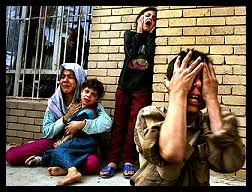
Reuters, through Ynetnews.com, gives statistics on Palestinian President Mahmoud Abbas' Fatah faction's increase in popularity over support for Hamas in the West Bank and Gaza Strip.  Includes discussion of some 5,000 Palestinian homes destroyed during the 22 day offensive by Israel in the Gaza Strip last December.


July 02, 2009 09:05 PM EDT


An Associated Press report from myway.com states the Obama administration has suspended joint military operations with Honduras to protest a coup that forced President Manuel Zelaya into exile.


THE WALL THAT HEALS - THE TRAVELING VIETNAM VETERANS MEMORIAL


July 03, 2009 09:16 AM EDT


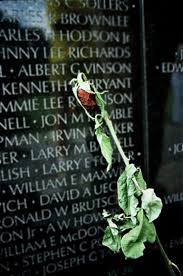
From Gather member Keith C., a photo essay of his visit of the Traveling Vietnam Veterans Memorial.


July 03, 2009 09:44 AM EDT


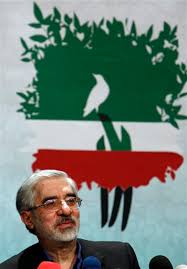
From Gulfinthemedia.com, Reuters reports Iranian MPs and other hardliners are pressing to pursue legal action against moderate leaders, including defeated candidate Mousavi, accused of inciting post-election turmoil after the disputed June 12 election.


Iran: British Embassy Staff to be Put on Trial


July 03, 2009 09:50 AM EDT


From Gulfinthemedia.com, Khaleej Times reports detained Iranian staffers of the British Embassy, arrested on June 27 and released, "made confessions" and will be put on trial.